Seriously, can you think of any better combination than chocolate and plants?
 |
| Ethel M. Chocolate Factory |
Last month Mr. Red House and I went to Las Vegas, and while there we visited the nearby Ethel M. Chocolates and their 3-acre Botanical Cactus Garden.
We took the short walk through the chocolate factory, which has windows where you can see the chocolates being made. Ethel M. Chocolates was founded by Forrest E. Mars, Sr., the guy who is known for introducing the Mars bar, M&M's, and Milky Way bars, among others.
 |
| Red Barrel Cactus (Ferocactus pilosus) |
After retirement from the famous Mars family business, Forrest Mars soon became bored and decided to open Ethel M. Chocolates, named for his mother. He located it Nevada because it was one of the few states that allowed the sale of liquor-filled chocolates. The factory was built in 1978, and Mars lived in an apartment on the second floor of the factory for many years, keeping a close eye on the workers and the chocolate.
 |
| Rabbit Ears (Opuntia microdasys var. albispina) |
The walk through the factory ends with a free chocolate sample and a shop filled with fabulous chocolates available for purchase; however the best part awaits outside. While the gourmet chocolates can be rather detrimental to the wallet (not to mention the waistline), the surrounding Botanical Garden is open and free to the public.

Two years after building the chocolate factory, Forrest E. Mars, Sr., added the gardens. In addition to chocolate, he had a passion for desert gardening and wanted to share the beauty of the desert with the public.
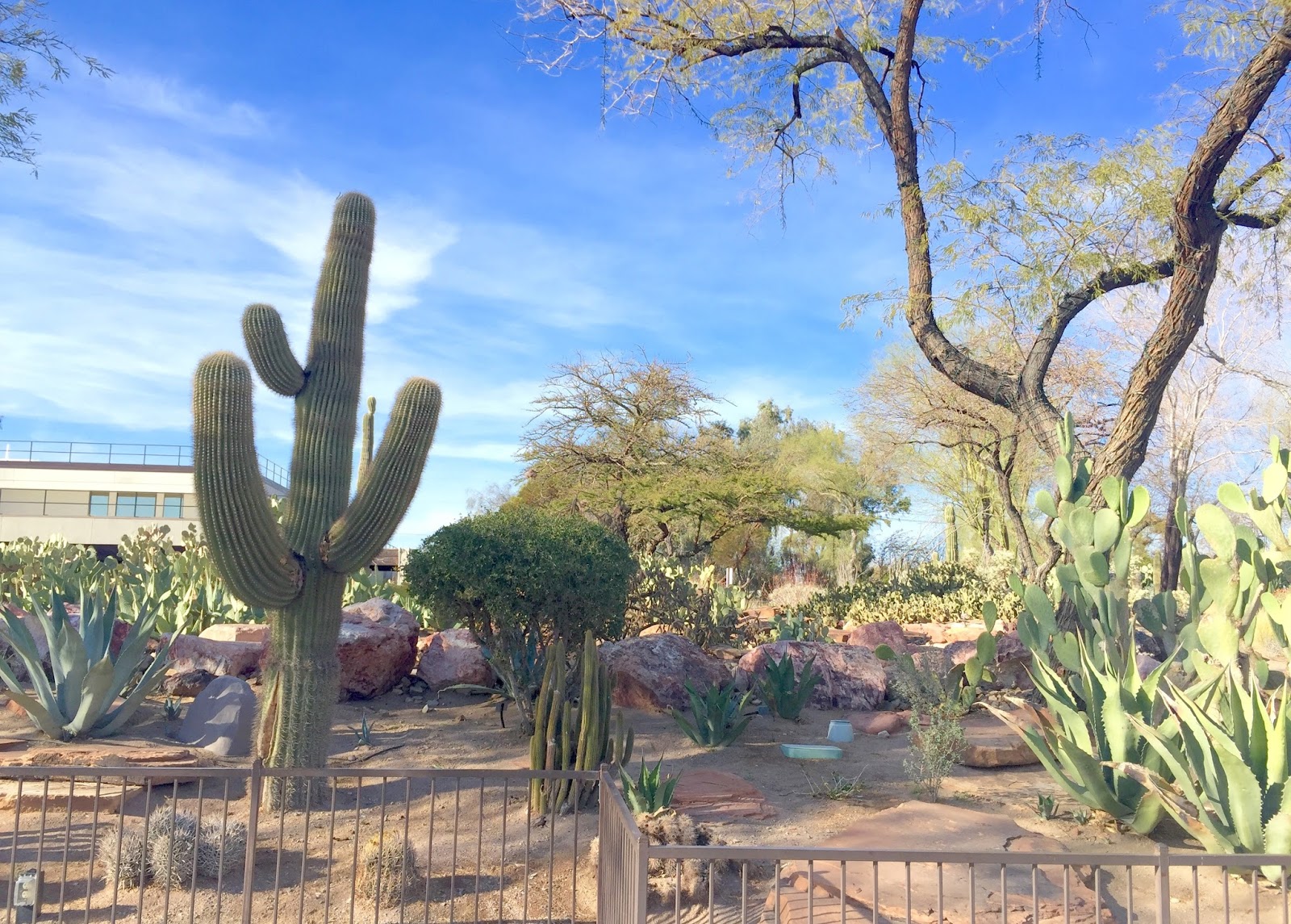
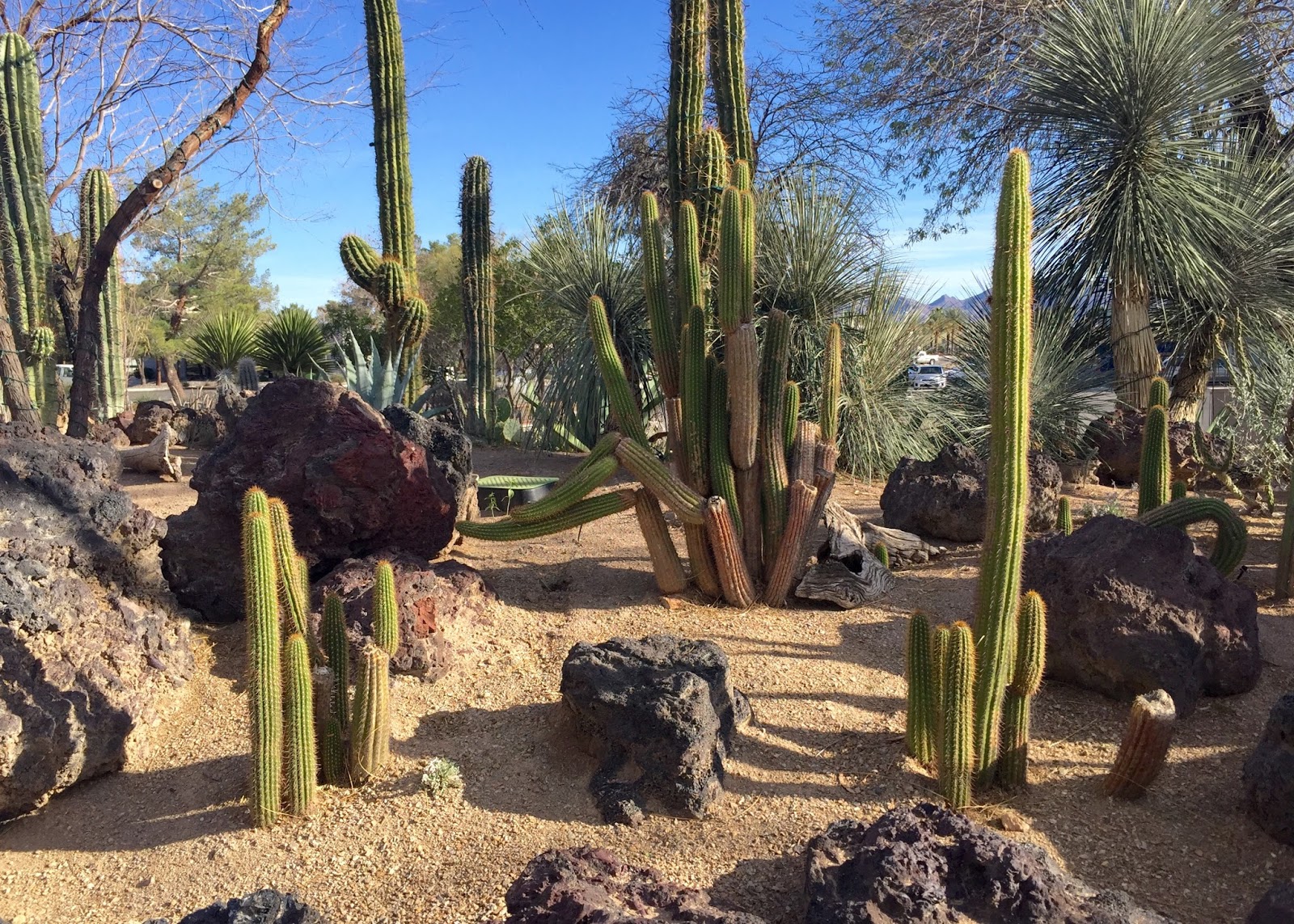
Containing over 300 different cactus and succulents, the Ethel M. Botanical Cactus Garden is a labor of love and one of the largest collections of its kind in the United States.
 |
| Rabbit Ears (Opuntia microdasys var. albispina) |
Half of the plants are native to the American Southwest, while the rest are plants from other regions that are able to acclimate to the desert climate of South Nevada.

While filled with desert plants, there is an irrigation system for the garden to keep all of the collected plants healthy. The chocolate factory recycles all of its waste water for use in the gardens. Beyond the gardens is a 1-acre water recycling plant named the 'Living Machine', which cleans the water using natural organisms such as bacteria, protozoa, algae, fish, and snails as opposed to chemicals.
 |
| a cholla cactus |
The ponds from the waste water facility attract different types of birds, and you can also sometimes find butterflies, lizards, rabbits, quail, and roadrunners there at the gardens.
 |
| bird's nest in a cholla cactus |
While we were visiting, we spotted a lizard as well as a hummingbird darting among some blooms.
 |
| the red blooms of Chuparosa aka Hummingbird bush (Justicia californica) |
We visited in February when a few plants were just starting to bloom. I imagine it would be even more beautiful when everything was in full bloom in spring.
 |
| Brittle Bush (Encelia farinosa) |
There were so many different and unusual looking cacti and succulents.
 |
| Red torch cactus (Lobivia huascha) |
Ethel M. Chocolates holds several big events throughout the year, one of which is its famous free-admission holiday light display around Christmastime.
 |
| The interestingly-shaped Boojum tree (Fouquieria columnaris) on the left, the interestingly named Opuntia molesta on the right |
Four gardeners start putting up an estimated 12 miles of light strands starting the beginning of October.
 |
| Old Man of the Mountains (Oreocereus celsianus) |
They work seven days a week, 8 to 10 hours a day to transform the garden into a holiday lighting extravaganza by their kick-off celebration in mid-November.
 |
| Purple Pancake Cactus (Opuntia santa-rita) |
The four gardeners also go through about 100 pairs of gloves a year hanging the lights.
 |
| Ocotillo (Fonquieria splendens) |
The lighting display goes on until January 1. By the time we visited in February, most of the lights had been removed, though we still saw a few strands here and there.

I enjoyed seeing all the amazing plants in the garden. My favorites, however, were the Saguaro cactus skeletons.

As the largest cactus in the United States, the Saguaro takes 75 years just to produce its first branch (arm) and doesn't reach its full height until it's over 150 years old. After one of these cactus dies, it then can take decades for all of the outer plant material to decay and to fully reveal its inner 'skeleton'. It is a gorgeous desert icon of the southwest.

It was so interesting to see such a beautiful and different type of garden growing in such a harsh climate as the Nevada desert.

If you are in the Las Vegas area and you'd like to eat some chocolate and wander around a desert botanical garden, Ethel M. Chocolates and Botanical Cactus Garden is located at 2 Cactus Garden Drive in Henderson, NV, about a 15 minute drive from the Las Vegas Strip.

Happy Gardening!


